Stackbound
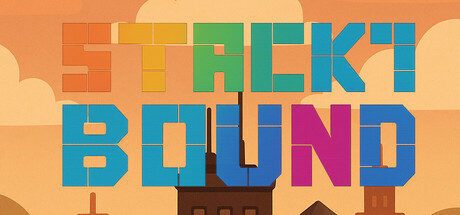
Physics tower-building with a deck of cards. Spin the wheel, play your hand, watch it lean.

Four games across four genres. Two out now, two on the way — from a studio of one that just likes making games.
Physics tower-building with a deck of cards. Spin the wheel, play your hand, watch it lean.
A point-and-click mystery in a town that emptied itself. Four acts, three endings, one furious cat.
Build a struggling MMA gym into a title-winning empire. Pixel-art management, deep as you like.

Chess with hidden hands, shared River cards and a Crown economy. Chess. Cards. Conquest.

Stackbound
Gravity is not on your side. Neither is the wheel.
Stack geometric blocks into towers that shouldn't stand up, then find out whether they do. Every placement shifts the load. Wood, stone and ice each behave differently. Before each round you spin the Difficulty Wheel and it decides what you're up against — wind storms, giant blocks, time pressure, gravity chaos. Then you play cards against it.
Scroll for more · click any image to enlarge
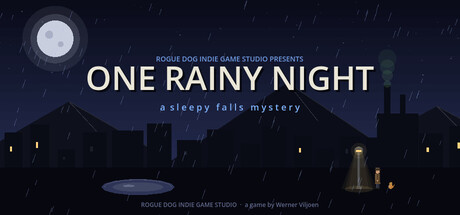
One Rainy Night
A point-and-click mystery in a town that emptied itself.
You are Detective Cole, and this was supposed to be simple: drive out to Sleepy Falls, collect your cat Jigsaw from your Aunt May, and drive home. But the town is empty. Dinner sits cold on every table. The phones are dead, the only bridge out is flooded — and Grimsby Aerosols, the factory on the hill, keeps hissing away into the rain with nobody left inside to run it.
Over four acts you'll cross an abandoned town, break into the factory that poisoned it, brave a pitch-black forest with something very large in it, row a storm-lashed lake to a house that shouldn't be lit, and descend into a flooded bunker to meet the man who did all this.
Why did an entire town walk underground singing? Who is the girl in the lakehouse who was never on any census — and why does the man in the forest guard a rowboat like it's the last door in the world?
One night. One detective. One increasingly damp cat.
Scroll for more · click any image to enlarge · story by Ben M Stroud
Cage Legacy
Coming soonA deep pixel-art MMA management simulation where every prospect, payday and corner decision reshapes your legacy.

Take charge of an ambitious MMA gym. Scout a changing world of fighters across eight weight divisions, study their styles and hidden weaknesses, negotiate salaries and fight contracts, assign training and recovery, manage diets and dangerous weight cuts — and decide which opponents are worth the risk.
You manage more than a record. Fighters age, improve, decline, get injured, lose confidence and eventually retire. Morale, loyalty, health and finances all matter. A perfect camp can still unravel through a missed weight cut, a bad press conference, a short-notice call, or a spectacularly ill-timed personal crisis.
Pad a record with a tune-up, or gamble on a ranked opponent for reputation. Popularity brings opportunity — but fame also brings scrutiny.
Scroll for more · click any image to enlarge · all fighters, promotions and events are fictional
Royal Gambit
In developmentReal chess, played straight — with hidden hands, shared River cards and a Crown economy layered on top.

Players move standard chess pieces on a standard board — check, checkmate, castling, en passant, all of it intact. But they also draw and play Power Cards that temporarily change movement, protect pieces or open lines, and shared River Cards flip conditions for both players mid-match.
A strong chess player keeps their advantage. Card knowledge, timing, hand management and reading your opponent are a second layer of mastery on top — not a replacement for the first.
Make chess feel fresh and cinematic without losing its strategic depth. Fast to understand, difficult to master.
Early art · click any image to enlarge · gameplay screenshots to follow
The studio
Rogue Dog Indie is Werner Viljoen, and a lot of very good tools.
There's no team here. No publisher, no roadmap, no early-access limbo. One person decides what gets made, makes it, tests it, and ships it — because the whole point is finishing games, not announcing them.
What makes that possible is being unsentimental about tooling. AI does a lot of the work at Rogue Dog — code, art pipelines, procedural music, dialogue passes, the tedious middle 80% of everything. It's used the way a small studio uses any force multiplier: to get an ambitious idea from a sketch to a shipped build without waiting for a headcount that's never coming. The judgement, the design decisions, the taste and the testing stay human. Every asset gets reviewed, every system gets played until it's actually fun.1
It's not a purity contest. It's a love of making games, and a refusal to let being one person be the reason a good idea doesn't get built. Four games in four genres — a physics puzzler, a point-and-click mystery, a management sim and a chess hybrid — is not a scope a solo developer could have attempted ten years ago.
Where an outside specialist makes the game better, one gets hired. The story for One Rainy Night was written by Ben M Stroud, a freelance writer commissioned through Fiverr — paid work, credited work, and the reason Sleepy Falls holds together as a mystery rather than a puzzle box with a plot stapled on.
Contact
Review keys, interviews, bug reports, or just to tell us the wheel ruined your best tower.